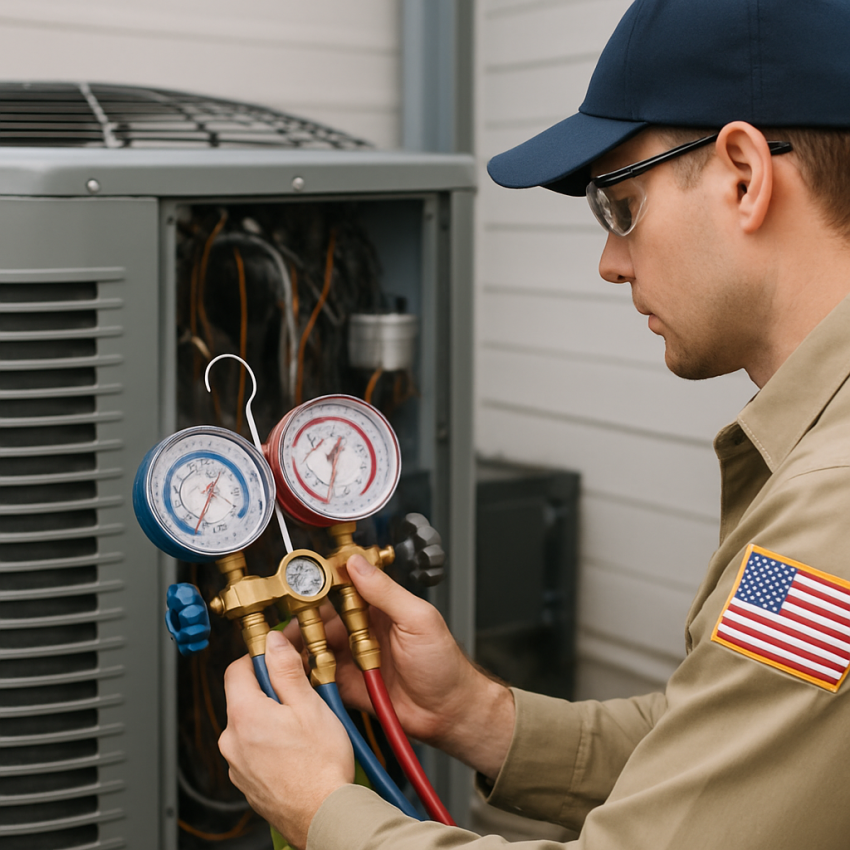
The United States is facing a long-term shortage of qualified heating and cooling technicians, even as homes and businesses demand smarter comfort, better indoor air quality, and efficient heat pump solutions. For service members and veterans, GI Bill benefits make it possible to step into a high-demand career with mission-critical relevance to every community. HVAC work rewards the discipline, problem-solving, and safety mindset you already bring from the military—and with the right program, you can translate those strengths into industry-recognized credentials and a stable, well-paid career pathway.
Choosing the right training is the key. The best GI Bill approved HVAC courses combine hands-on labs, job-focused curriculum, and real-world troubleshooting so you’re employable on Day One. Whether you’re a beginner building fundamentals, a seasoned tech upskilling to electrification and advanced refrigerant systems, or a Guard/Reserve member seeking flexible learning, there’s a pathway aligned to your goals and benefits. Below, you’ll find what the GI Bill covers for skilled trades, how to evaluate programs, and the practical steps veterans are taking to move from service to the skilled trades with confidence.
How the GI Bill Works for HVAC Training
The GI Bill doesn’t only fund college degrees—it also supports state-licensed, VA-approved non-college degree programs and trade schools that teach marketable skills. For HVAC in particular, that means you can use benefits for clock-hour training that blends classroom theory with shop time, simulators, and live equipment labs. Programs must be approved by the state approving agency and listed in the VA’s WEAMS Institution Search to qualify.
Under the Post-9/11 GI Bill, eligible learners typically receive tuition and fees paid directly to the school (up to the in-state or approved amount), a monthly housing allowance based on the E-5 with dependents Basic Allowance for Housing rate where the school is located, and an annual books-and-supplies stipend (up to $1,000). If your program is primarily online, a modified housing allowance applies. Montgomery GI Bill (MGIB) benefits are paid to the student at a fixed monthly rate; you then cover tuition and expenses, which can be advantageous if you select an accelerated or lower-cost program.
Another pathway many veterans consider is Apprenticeship and On-the-Job Training (OJT). With OJT, you earn a wage from an employer while receiving a decreasing stipend from the VA as you progress. This option is excellent if you want to get paid while you learn and build experience under a licensed contractor. Some students start with a short, intensive HVAC fundamentals course to become job-ready, then transition into an apprenticeship that keeps benefits flowing while they gain mastery on real installations.
When comparing benefits, pay attention to program structure. Clock-hour trades programs often run full-time and can be completed in weeks or months rather than years, making them ideal for those who want a faster route to steady income. Also consider your remaining entitlement months, whether you qualify for the Yellow Ribbon Program at private institutions, and how the program’s schedule fits with family or Guard/Reserve commitments. A school’s certifying official can help you estimate out-of-pocket costs and timelines before you enroll.
What to Look For in a GI Bill–Approved HVAC Program
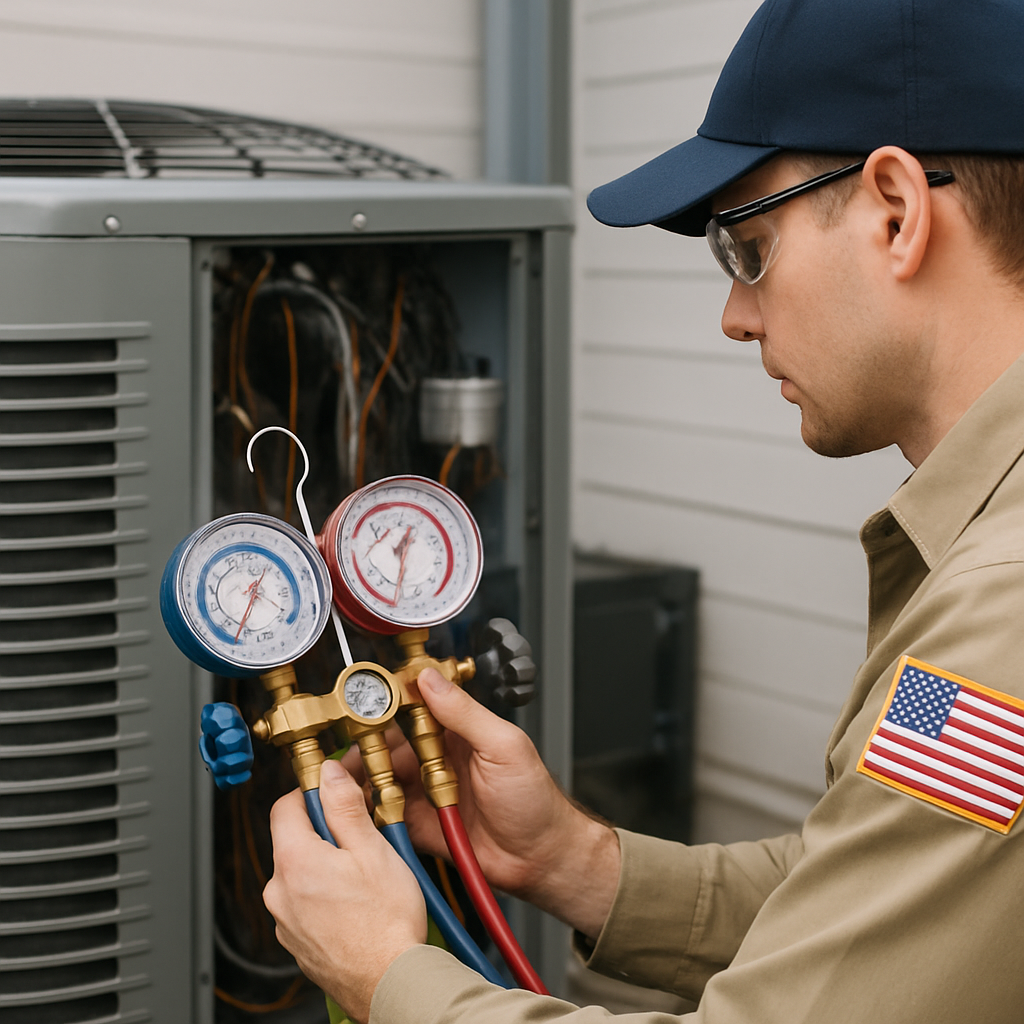
The most valuable HVAC training teaches you to think like a technician, not just memorize theory. Look for programs that build strong fundamentals—electrical basics, safety procedures, and the refrigeration cycle—before moving into advanced topics you’ll use on day one in the field. High-quality curricula prioritize hands-on labs that mirror real job conditions, so you can practice brazing, leak detection, recovery and charging, and live diagnostics with gauges and digital tools.
Industry relevance matters. Seek courses that align with today’s systems and tomorrow’s codes: high-efficiency furnaces, inverter-driven heat pumps for cold climates, low-GWP refrigerants, smart thermostats, and airflow diagnostics for comfort and energy performance. Training that covers system design, duct sizing, static pressure, and zoning gives you an edge—many callbacks in the trade aren’t equipment failures; they’re airflow issues. A school that drills you on quality installation practices will save future employers time and money, which translates into faster job offers and stronger starting pay.
Certification preparation is another marker of a job-ready program. You’ll want hands-on coaching that helps you earn the EPA 608 certification (required for handling refrigerants) and, ideally, preparation for NATE or similar industry credentials. Look for small class sizes, modern lab equipment, and instructors with recent field experience. Flexible learning options—such as online theory modules paired with intensive in-person labs—help you balance family life, drill schedules, or part-time work while progressing quickly.
Veteran-friendly support is essential. From pre-enrollment planning and VA paperwork guidance to tool lists, resume coaching, and employer introductions, the right school treats your success like a mission. Ask how often graduates are placed, which local contractors they partner with, and whether advanced modules (like refrigerant charging optimization, commissioning, or heat pump troubleshooting) are available after you land your first role. You can explore GI Bill approved HVAC courses that blend hands-on classrooms, online learning, and real-world scenarios so you graduate ready to wire controls, set airflow, commission equipment, and prevent the callbacks that cost contractors the most.
Real-World Paths: Veterans Transitioning Into HVAC
Every military specialty brings strengths that translate directly to the mechanical trades: attention to detail, safety culture, chain-of-command communication, and the grit to troubleshoot under pressure. Consider a few common paths veterans take into HVAC with the GI Bill:
• Accelerated fundamentals to entry-level install: Many learners complete an 8–16 week, clock-hour program focused on electrical basics, furnace fundamentals, refrigerant recovery, vacuum practices, and refrigerant charging. With an EPA 608 card and solid lab time, grads step into installer or junior service roles. From there, employers often sponsor advanced training—airflow balancing, combustion analysis, and heat pump commissioning—so you stack skills while earning.
• Heat pump specialist for the electrification market: With utility incentives and code changes driving adoption, technicians who understand load calculations, duct design, inverter diagnostics, and cold-climate strategies are in high demand. A GI Bill–approved program that emphasizes system design, zoning, and commissioning can fast-track you into roles focused on high-performance retrofits—a niche that commands premium pay and steady work in both residential and light commercial markets.
• OJT/apprenticeship while using benefits: Veterans who prefer to “learn by doing” often accept an entry role with a contractor and use the VA’s OJT benefits to supplement their income while training. Pairing OJT with targeted short courses—airflow measurement, advanced troubleshooting, or hydronics—accelerates your wage progression and prepares you for certifications that boost job mobility.
Case in point: A former Navy electrician leverages the GI Bill for a hybrid course—online theory at night, weekend labs on equipment racks and live gas furnaces. Within three months, he earns EPA 608 and completes capstone labs on airflow diagnostics and heat pump commissioning. He joins a regional contractor installing variable-speed systems, where the ability to read static pressure and adjust ductwork reduces callbacks by 40% on his crew. Another example is a Guard member who chooses an OJT path; with structured mentorship and a few targeted classes on refrigerant transition and safe brazing, she advances from helper to service tech in under a year while benefits supplement her income.
Whichever route you choose, a deliberate plan smooths the transition. Verify approval status in the VA’s WEAMS search, request a syllabus and tool list, and speak with the school certifying official to map your entitlement months and housing allowance. If you have prior electrical or mechanical experience, ask about credit for prior learning to shorten your timeline. Build a study rhythm early—especially for refrigeration theory and electrical schematics—then get as many reps as possible on the lab floor. The combination of disciplined study and hands-on repetition will transform your military-honed problem-solving into a civilian career that’s stable, well-paid, and essential in every community.

Beirut architecture grad based in Bogotá. Dania dissects Latin American street art, 3-D-printed adobe houses, and zero-attention-span productivity methods. She salsa-dances before dawn and collects vintage Arabic comic books.