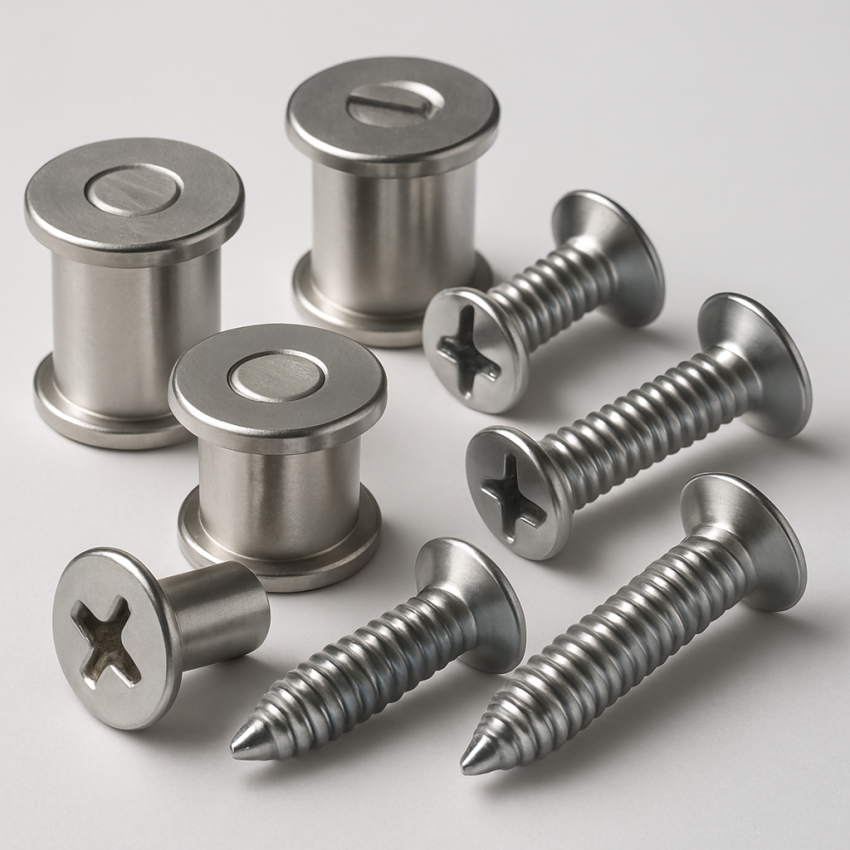
When projects demand durability, removability, and a clean finish, few fasteners are as versatile as binding barrels and screws. Also known as Chicago screws, post-and-screw fasteners, or binding posts, these two-part connectors bring together paper stacks, leatherwork, signage, swatch books, and light structural components with a tidy, low-profile look. Their reusability saves time on maintenance and upgrades, while material and finish choices let you match function with style. Whether organizing architectural specs, building a product sample kit, or assembling a DIY leather strap, mastering this category of hardware opens up reliable, repeatable ways to connect materials—without complicated tools or permanent adhesives.
What Are Binding Barrels and Screws? Anatomy, Materials, and Common Uses
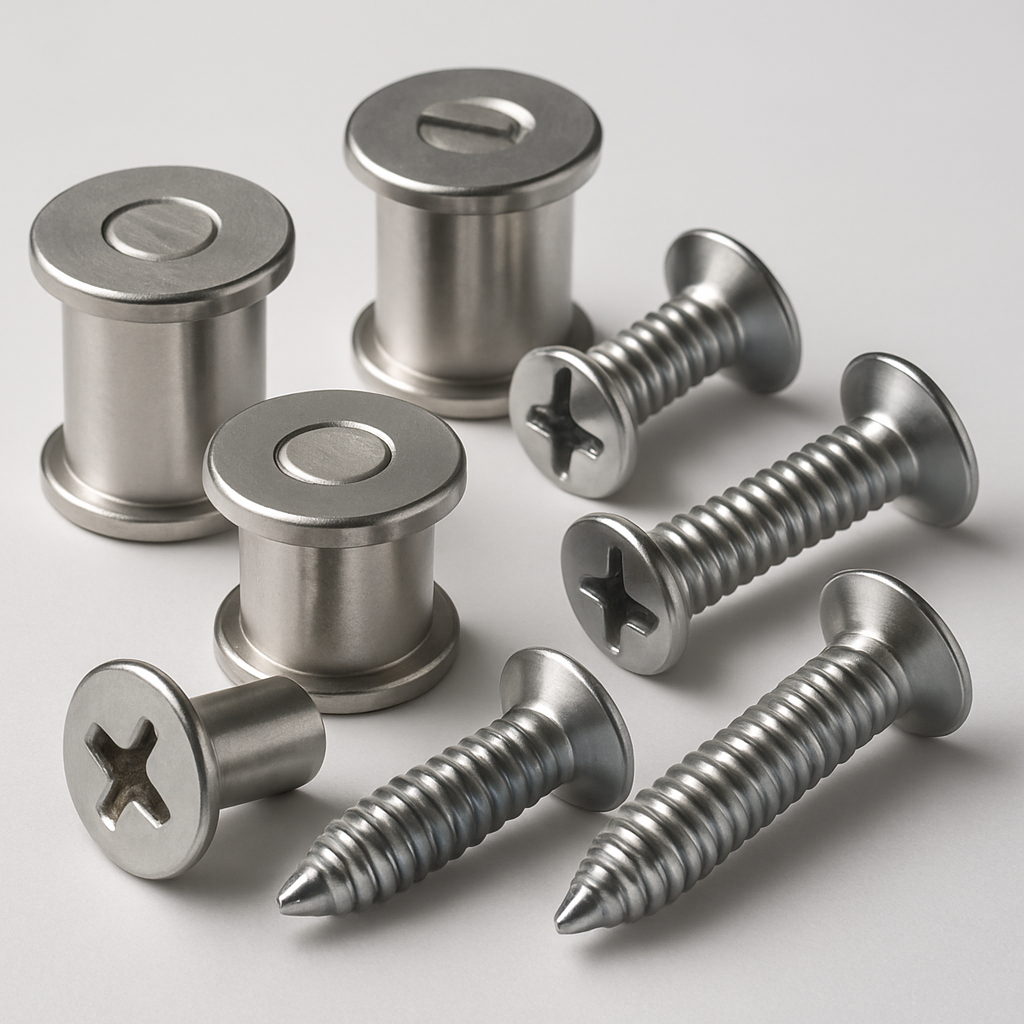
Binding barrels and screws are two-piece fasteners. The “barrel” (also called the post) is a hollow, internally threaded cylinder with a head; the “screw” threads into the barrel to clamp materials between the two heads. Head profiles are typically low and smooth, making these fasteners ideal for applications where snagging is a risk or where a neat, finished appearance is important. Variations include slotted, Phillips, or hex drives on the screw side, and occasionally a slotted head on the barrel side to help hold it during tightening.
Material choice tailors performance. Brass offers a traditional look and good corrosion resistance, popular for bookbinding, photo albums, and decorative leatherwork. Stainless steel excels in strength and weather resistance for outdoor signage, marine folders, and field kits. Carbon steel, often zinc-plated, provides cost-effective strength for shop fixtures and jigs. Aluminum delivers lightness for travel kits and portable displays. Nylon options prevent marring, reduce weight, and electrically isolate components in low-voltage applications. Finishes range from polished brass and nickel to chrome, black oxide, and anodized colors, enabling a consistent aesthetic across hardware and accessories.
Sizes span short posts for thin stacks to extra-long barrels that accommodate binders, fabric layers, or thick leather. You’ll find metric and inch thread standards, head diameters to suit both subtle and decorative looks, and specialty variants like knurled barrels for extra grip or extension posts to increase capacity on the fly. Because they come in many sizes and finishes, finding the right binding barrels and screws for your project is straightforward, whether you’re outfitting a studio, office, classroom, or shop floor.
Real-world scenarios highlight the breadth of use. Print studios bind proof sets that clients can easily flip or reorder. Hospitality venues assemble menu boards that withstand daily updates. Leather crafters build belts, notebook covers, and camera straps that can be serviced and resized. Sign makers mount placards and sample rings that must be reconfigured as product lines change. In light-duty furniture knock-down assemblies, post-and-screw fasteners deliver a flush, tamper-aware connection without complex joinery. In each case, the fastener’s reusability and sleek profile are central to the outcome.
How to Choose the Right Size, Strength, and Finish for Your Application
Selection starts with the “stack” you plan to bind: the total thickness of all materials plus any washers or spacers. Measure this carefully using calipers or a reliable ruler. Choose a barrel length that slightly exceeds the stack—typically by 1 to 2 mm—to ensure proper engagement without bottoming out. For imperial sizing, a margin of about 1/16 inch is a practical rule of thumb. You want full thread engagement but not so much extra length that the screw clamps on threads rather than the workpieces.
Thread size and type matter. Common options include metric M4 and M5 or inch sizes like #8-32. As a general guide, aim for thread engagement equal to at least one screw diameter in the barrel to achieve dependable strength. Heavier-duty assemblies (e.g., metal panels or thicker hardwoods) may benefit from larger diameters for improved tensile and shear performance. Keep in mind that the head diameter should sufficiently cover your clearance hole while preserving the desired aesthetic; larger heads distribute pressure across softer materials like leather and paper to prevent crushing.
Consider mechanical stresses and environment. For outdoor signage, damp areas, or frequent handling, stainless steel resists corrosion and wear. For decorative or vintage projects, brass offers a warm tone and patinas gracefully. Where glare or fingerprints are concerns, a matte black oxide or satin nickel finish helps maintain a professional appearance. If weight is critical—such as in portable demo kits—aluminum or nylon may be a better fit. For security or public-facing installations, look for tamper-resistant drives (like pin-in Torx) or one-way designs that deter unapproved disassembly.
Accessories fine-tune performance. Flat washers spread load on soft materials, nylon washers reduce squeaks in moving assemblies, and spacers create deliberate gaps for airflow or cable runs. Grommets or eyelets around holes in fabric or thin plastic prevent tearing. Threadlockers, applied sparingly, keep connections tight in vibration-prone settings. When countersinking, match the head style to the chamfer angle to preserve clean lines and maximize clamping power. Small choices—drive type, head style, washer material—accumulate into a reliable, long-lasting assembly optimized for your exact use case.
Installation Tips, Maintenance, and Creative Applications That Elevate Your Builds
Clean, repeatable installation begins with accurate holes. For stacks where alignment matters—such as sample decks or architectural specs—use a drill guide or punch all materials together to maintain concentricity. The hole should provide light clearance for the barrel’s outer diameter. If you’re countersinking, test on scrap to ensure the head sits flush without overcutting. Prepare both sides: the barrel typically inserts from the presentation side for a smooth, finished look, while the screw side can face inward or outward depending on visibility and access.
Tightening technique preserves materials. Bring the components together gently, seating the barrel first. Hold the barrel head with a coin or slotted driver if it has a slot to prevent spinning, then snug the screw using the appropriate bit—Phillips, flat, or hex—without overtightening. For paper stacks, stop as soon as pages stop shifting; over-compression can crease edges and hamper flipping. For leather, aim for firm clamp-up that resists pull-through without distorting the grain. If vibration is expected, a medium-strength threadlocker helps, but apply it only to threads and avoid wicking into porous materials.
Care is straightforward. Wipe metal finishes with a soft cloth to remove oils and debris. In corrosive environments, periodic checks prevent frozen threads; a tiny dab of light lubricant can protect steel parts. If you anticipate frequent reconfiguration—common in product libraries and design studios—store spare barrels, screws, and washers in labeled containers sorted by length and finish. That organization turns on-the-spot updates into a five-minute task rather than a half-day hunt.
Creative applications continue to grow. In cafés, menu boards assembled with binding barrels and screws withstand daily changes and cleaning cycles. In maker spaces, project notebooks and tool jigs gain modularity: swap a jig plate, add a spacer, or flip orientation without drilling new holes. Custom EDC belts and camera straps use low-profile hardware that’s easy to service in the field. On motorcycles and bicycles, non-critical panels and guards can be fastened for quick inspection access. Retail showrooms build swatch books and sample rings that scale as collections expand. Even exhibition installers appreciate how quickly these fasteners unify placards and protective covers while keeping a sleek, museum-ready look.
Consider a few scenarios. A small architecture firm compiles evolving material samples; switching from snap rings to post-and-screw sets prevents lost pieces and supports consistent labeling. A print shop assembling proof sets appreciates the ability to replace individual sheets without destroying the binding. A leathercraft studio standardizes on stainless, black-oxide Chicago screws for belts and camera straps, balancing weather resistance with a refined matte finish. Across all, the common thread is control: the right fastener lets you build intentionally, maintain easily, and adapt rapidly as needs change.

Beirut architecture grad based in Bogotá. Dania dissects Latin American street art, 3-D-printed adobe houses, and zero-attention-span productivity methods. She salsa-dances before dawn and collects vintage Arabic comic books.