Vehicle and equipment washing looks simple on the surface, yet the dirty water left behind is anything but harmless. Runoff from trucks, construction gear, street sweepers, and industrial vehicles often contains oils, grease, heavy metals, salts, detergents, and fine solids. Allowing that wash water to reach a storm drain can trigger violations of the Clean Water Act’s National Pollutant Discharge Elimination System. Achieving NPDES compliance is therefore essential not only to protect waterways but also to manage risk, insurance exposure, and long-term operating costs. By designing the right wash area, capturing and treating wash water, and following clear procedures, facilities can maintain a clean fleet while safeguarding environmental performance and budget stability. For a deeper overview of wash-water control strategies that support NPDES compliance, explore educational resources that focus on practical systems and best practices.
What NPDES Compliance Means for Washing Operations
The National Pollutant Discharge Elimination System regulates the discharge of pollutants from point sources to waters of the United States. In practice, this means that any outdoor washing activity that allows wash water to enter a gutter, storm drain, ditch, creek, or other surface water may be subject to permitting and enforcement. Many businesses assume that “just rinsing” vehicles is harmless. Yet even clear water can carry emulsified oils, brake dust, zinc from tires, iron, and fine sediment. Adding cleaners, degreasers, or acids amplifies the pollutant load and changes pH, all of which fall squarely under NPDES oversight. The default rule is straightforward: keep process wastewater out of the storm system.
For fixed facilities, NPDES compliance typically hinges on eliminating discharges or obtaining the right coverage under a general or individual permit. A common pathway is a zero-discharge approach: capture all wash water on an impermeable pad and route it to a closed-loop reclaim system. Another option is routing captured wash water to the sanitary sewer with proper pretreatment, if authorized by the local utility (the POTW). Where neither is possible, waste hauling under a manifest may be the practical solution. What does not work is allowing any portion of wash water to flow off the pad to soil or a storm inlet—such releases can be classed as illicit discharges.
Mobile contractors face unique challenges because they often wash at client sites. Temporary berms, vacuum recovery, and portable filtration become essential. In many jurisdictions, mobile washers must operate under their own permit coverage or be listed under a client’s plan; either way, they’re responsible for capture and lawful disposal. The requirement to manage wash water applies as much to a fleet depot as it does to a construction laydown yard, transit garage, or municipal public works yard. From Alaska’s winter brine to Florida’s coastal corrosion, the pollutants differ, but the core principle is the same: no contaminated wash water to storm drains. Embedding these controls into routine operations is the foundation of durable, audit-ready NPDES compliance.
Designing a Compliant Wash Area: Containment, Capture, and Treatment
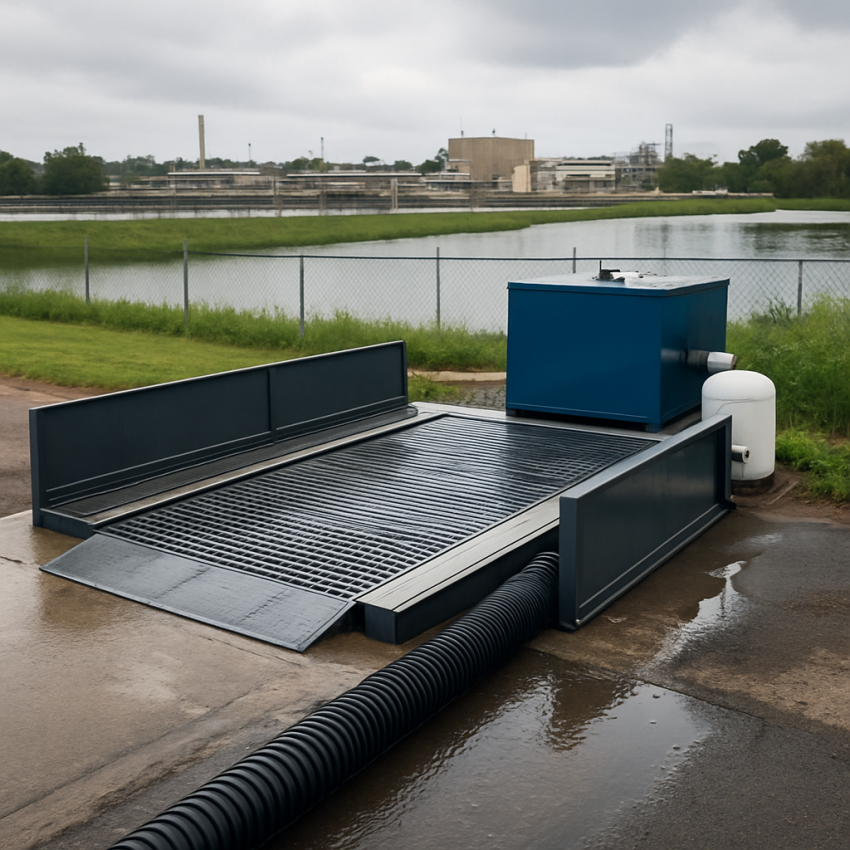
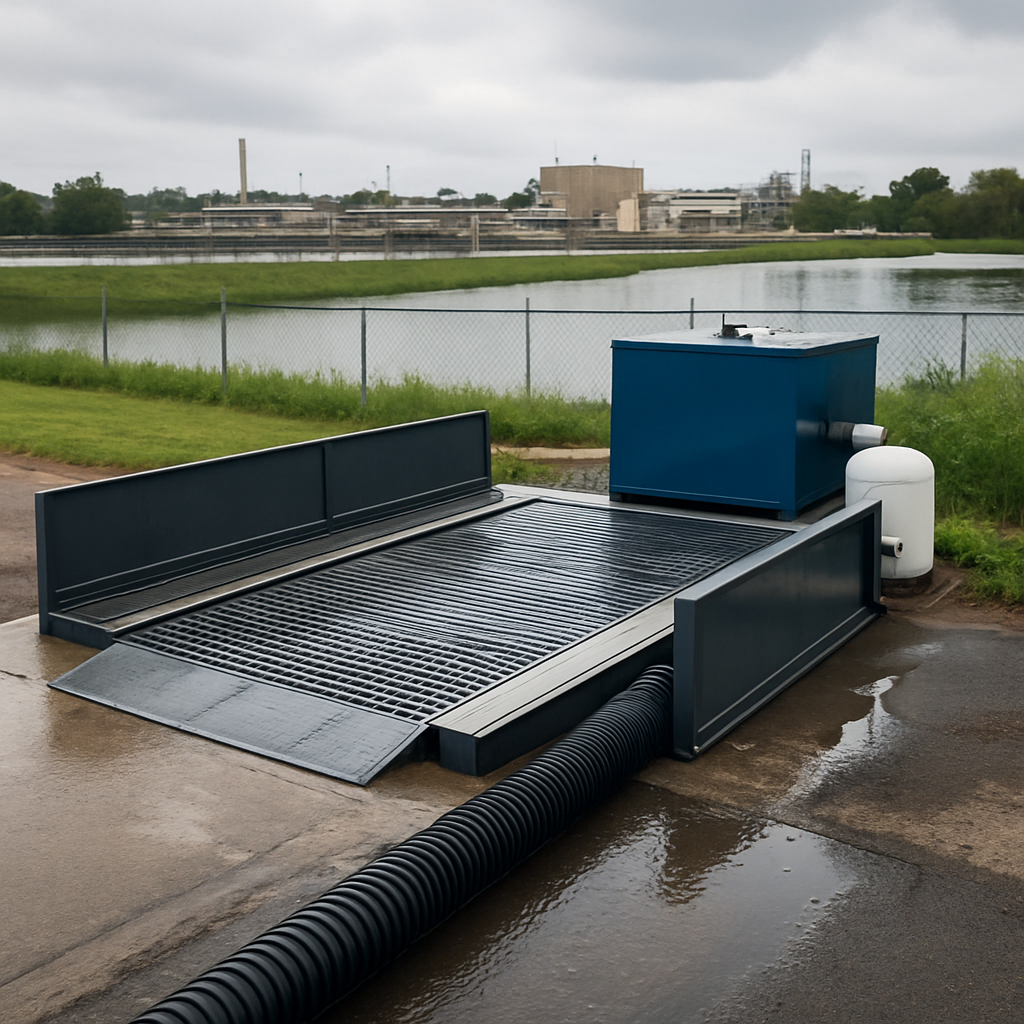
Physical design is where policy meets pavement. A compliant wash area starts with an impermeable containment pad sized for the largest vehicle footprint, with sloped grading to keep water on the pad and away from edges. Berms or curbs define the wash zone; grated drains or trench inlets collect flow for treatment. Upstream of any pump or separator, a sludge pit or sump captures heavy grit—critical for extending equipment life and reducing maintenance. Routine cleaning of this pit prevents re-suspension of solids and helps maintain hydraulic capacity during peak use.
Next in line is an oil-water separator to remove free and dispersed hydrocarbons. Modern coalescing plate designs can achieve low oil-and-grease concentrations when properly maintained, but they work best when upstream solids are controlled and surfactant use is moderated. Beyond separation, multi-stage filtration (screen, sand, bag/cartridge, or multimedia) targets fine particles. Some systems add carbon polishing to address residual organics, and pH control where acidic or caustic cleaners are used. The goal is consistent removal of TSS, oil and grease, and metals-laden particulates so the effluent meets either reuse criteria in a closed-loop system or the local discharge limits for a sanitary sewer connection.
Closed-loop water reclaim can reduce freshwater use by 60–90% while avoiding storm discharges entirely. These systems recirculate clarified water for pre-rinse and undercarriage stages while preserving a fresh-water final rinse for cosmetic quality. Winterized designs protect lines and pumps from freezing, and anti-foam controls manage surfactants. Where climate or operations demand, a canopy or partial cover can reduce stormwater contact, though the key remains: keep process water segregated and captured.
For mobile washing, the same principles are deployed with portable tools—modular containment mats, weighted berms, drain covers, vacuum recovery with sump boxes, and compact filtration carts. On a city block, this can be as simple as setting berms around a refuse truck, laying a mat over pavement seams, and vacuuming to a portable tank. On a highway yard, crews may place vehicles on a temporary rack with integrated grating and pump-back to a service truck. In each case, the design controls flow, prevents off-pad migration, and channels water to treatment or lawful disposal. Effective signage and ground markings reinforce where washing is allowed and which drains are off-limits, helping crews maintain consistent NPDES compliance even under tight schedules.
Permitting, Recordkeeping, and Everyday Practices That Keep You Audit-Ready
Compliance is a system, not a single device. Start by determining applicability: does the site have an industrial classification under the Multi-Sector General Permit (MSGP) or municipal separate storm sewer system (MS4) oversight? Are there outfalls where stormwater leaves the property? Do washing activities occur outdoors? If wash water is fully captured and either recycled or sent to the sanitary sewer under local approval, the operation often avoids stormwater discharge permitting for that activity. If any discharge to surface water is anticipated, formal permit coverage is likely required, including a Notice of Intent, development of a Stormwater Pollution Prevention Plan (SWPPP), and routine inspections and training.
Regardless of permit path, certain practices are universal. Map every drain and mark storm inlets clearly. Establish standard operating procedures that cover pad sweeping, solids removal, separator maintenance, filter changes, and sludge disposal with manifests. Keep a log of inspections, service intervals, and corrective actions. Train operators to minimize detergent use, choose biodegradable, non-phosphate cleaners, and avoid acid-based wheel products unless the system is designed to neutralize pH. Store chemicals under cover in secondary containment, and stock spill kits near the wash area. A simple laminated checklist at the wash bay keeps steps front-of-mind: verify berms, check pump screens, confirm separator flow, and record run hours.
Real-world scenarios illustrate how these measures pay off. A municipal street sweeper yard that historically rinsed hoppers on open pavement shifted to a grated wash rack with coalescing separation and bag filtration. By capturing solids at the source, the yard cut vacuum truck cleanouts in half and eliminated sheen at the downstream outfall—two tangible wins for cost and environmental performance. A construction contractor with mobile rigs equipped crews with portable berms and vacuum recovery; they now service dozers at job trailers without risking an illicit discharge citation, and water hauled back to the yard is filtered for reuse. A regional delivery fleet facing winter salt corrosion implemented closed-loop reclaim with a heated pad. The result: cleaner undercarriages, fewer brake caliper replacements, and verifiable NPDES compliance through logs and photos.
Sampling and monitoring may be required under certain permits or local discharge agreements. If so, designate sampling points, calibrate meters, and build events into the preventive maintenance calendar. Keep vendor manuals, SDS sheets, and calibration logs on file. Use plain-language visual aids—arrows on the floor for flow direction, photos of acceptable berm setups, and color-coded bins for sludge versus oily sorbents. These low-cost cues reduce training time and errors. For large facilities, a monthly cross-functional walk with operations, maintenance, and EHS leaders helps catch small issues before they become violations. When contractors perform washing on-site, incorporate their recovery plan and disposal method into contracts and require proof of training and insurance.
Success is cumulative: physical systems that capture and treat wash water; procedures that standardize operations; documentation that proves performance; and a culture that sees clean equipment and clean water as inseparable goals. With the right combination of containment, filtration, oil-water separation, and disciplined routines, fleets and facilities can meet regulatory expectations, protect community waterways, and extend the life of their assets—day in, day out.

Beirut architecture grad based in Bogotá. Dania dissects Latin American street art, 3-D-printed adobe houses, and zero-attention-span productivity methods. She salsa-dances before dawn and collects vintage Arabic comic books.