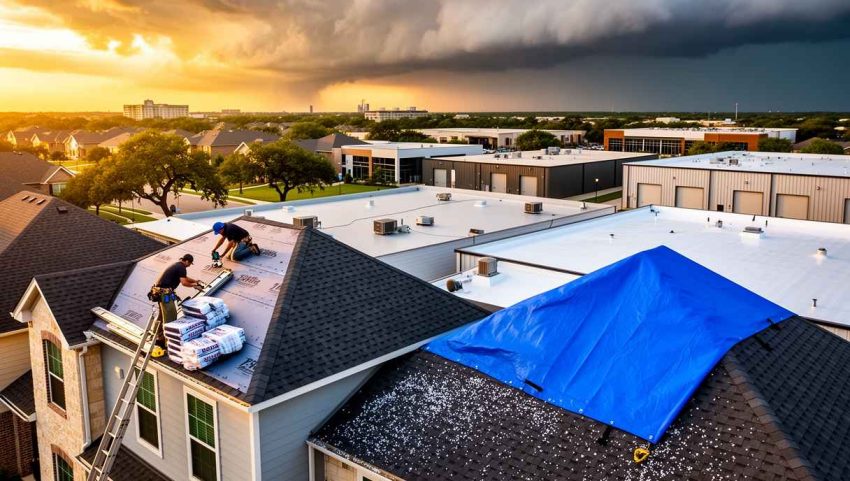
Cedar Park sits at the meeting point of Hill Country gusts and Austin’s heat, which means roofs here battle more than occasional wear. Triple-digit summers, spring hailstorms, and sudden cold snaps create constant stress that can split shingles, crack sealants, and loosen fasteners. Left unattended, these small issues quickly turn into leaks, interior damage, and mounting energy costs. The key is fast, locally informed roof repair that addresses the unique mix of sun, hail, and wind this region sees year-round. Below, explore what Cedar Park roofs face, proven repair methods for shingle, metal, and flat systems, and practical, neighborhood-ready examples that help homeowners and businesses choose lasting solutions with confidence.
What Cedar Park Roofs Face—and How Timely Repairs Prevent Bigger Costs
In Cedar Park and neighboring communities like Leander, Round Rock, and Georgetown, roofs absorb intense UV exposure that bakes oils out of asphalt shingles, making them brittle and prone to granule loss. This UV-driven wear shows up as balding patches, curling tabs, and surface cracking. Add seasonal winds sweeping across the Hill Country and you’ll see lifted edges and compromised seal strips that let wind-driven rain push under the roofing. When spring storms arrive, hail damage can bruise or fracture shingles and dent metal panels, creating hairline cracks or coating losses that are easy to miss from the ground—but big enough to let water in.
Thermal cycling compounds the problem. Hot afternoons followed by cooler nights force materials to expand and contract, loosening nails, stressing flashing, and degrading caulks around pipes, skylights, and vents. Flat and low-slope roofs can develop ponding and seam stress, especially if drains or scuppers are partially blocked by leaves and granules. Over time, these small openings permit moisture to reach the underlayment and decking, where it can cause rot, mildew, and insulation damage. Indoors, the first sign is often a faint ceiling stain, musty odor, or sudden spike in energy bills as attic moisture undermines insulation performance.
Timely roof leak repair is far less disruptive—and less expensive—than letting damage spread. Fast action typically includes targeted shingle swaps, re-sealing flashings, replacing cracked pipe boots, and tightening or re-fastening areas subject to uplift. For metal and flat roofs, repairs might center on re-seaming, installing new gaskets, or heat-welding membrane patches to stop water at the source. Pro tip: schedule post-storm inspections, even if nothing looks wrong from the street. A trained eye can spot hail bruising, lifted edges, and subtle flashing gaps hidden by trim or ridge caps. For fast, local help, consult a trusted team that specializes in Cedar park roof repair to keep minor issues from becoming major projects.
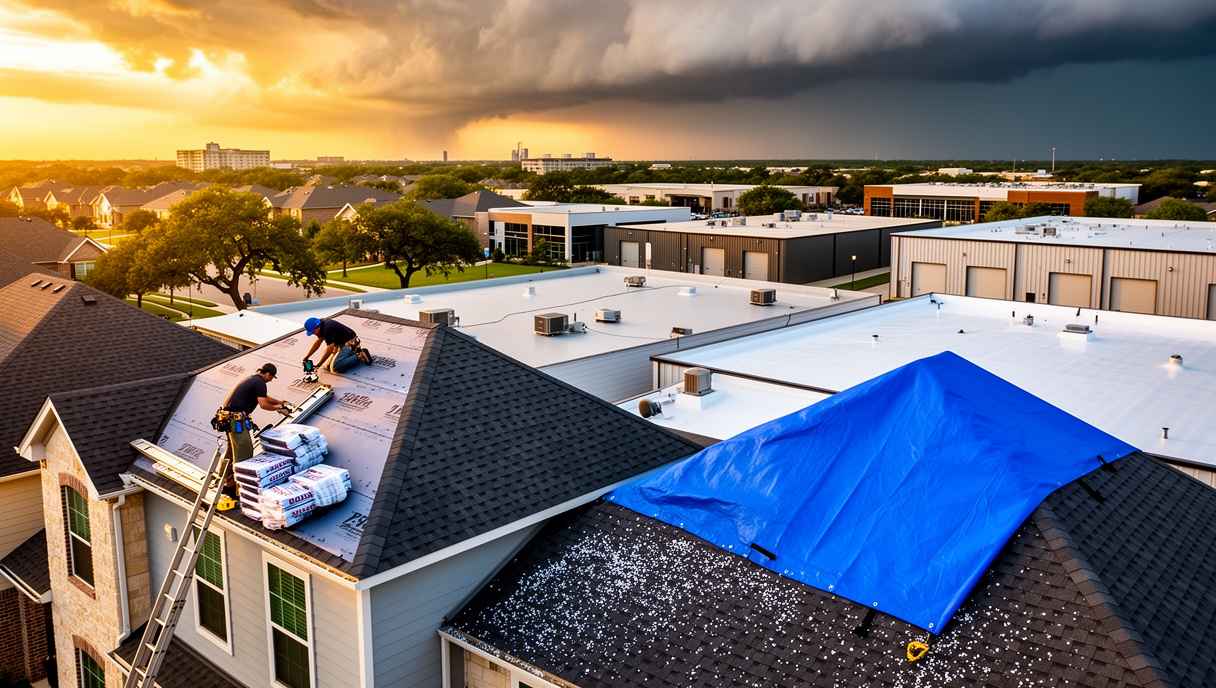
Repair Methods That Work in Williamson County: Shingle, Metal, and Flat Roof Solutions
Asphalt shingles dominate many Cedar Park neighborhoods, and the best repairs start with a careful match of profile and color to maintain both performance and curb appeal. A proper shingle repair includes removing the compromised tabs, checking the underlayment for moisture, and installing new shingles with the correct nail count and placement to resist local wind gusts. Valleys and eaves are high-risk zones; adding or upgrading self-adhered underlayment in these areas creates a durable, watertight barrier. Step and counterflashing around chimneys and sidewalls often benefit from reset or replacement, particularly when the original sealants have cracked under UV exposure. Pipe boots, a frequent source of leaks, should be swapped for UV-stable versions when any cracking or warping appears.
Metal roofing is prized for its longevity in Cedar Park’s climate, but it still requires mindful care. Repairs typically target fastener back-out, degraded washers, and seam movement caused by thermal expansion. Technicians re-seat or replace fasteners with oversized or longer options when needed, apply fresh butyl sealant tapes, and address any panel dents that could collect water. On standing seam systems, loose clips or compromised seams can be re-crimped or sealed to restore watertight integrity. Because metal reflects heat effectively, maintaining these details not only prevents leaks but also helps sustain the roof’s energy-saving benefits throughout the summer.
For flat and low-slope commercial or residential sections, membranes like TPO or PVC respond best to manufacturer-approved patching and heat-welding techniques. Repairs focus on cleaning and prepping the area, then applying reinforcement and new membrane material to form a monolithic, bonded patch. At parapet walls, drain bowls, and roof-to-wall transitions, re-sealing terminations and checking for open laps is critical. Where ponding is an issue, crews may improve drainage with scupper adjustments or added tapered insulation. Some systems benefit from elastomeric coatings to extend service life, reflecting heat while sealing micro-cracks. Finally, integrating ventilation or verifying balanced intake and exhaust in attics can reduce heat load, slow material aging, and help prevent moisture-related issues year-round.
Real-World Cedar Park Scenarios, Budgets, and Choosing the Right Pro
Consider a home near Buttercup Creek after a spring squall: the roof looks fine from the curb, but a faint ceiling ring appears over the hallway. An attic check reveals a slow drip at a pipe boot dried and cracked by last summer’s heat. A targeted repair here—new UV-stable boot, re-sealed flashing, and a couple of replacement shingles—stops the leak and prevents sheetrock damage. Now imagine a Ranch at Brushy Creek property after a hail event: miscolored granules in the gutters and faint dimples on ridge caps hint at widespread bruising. A systematic inspection documents impact to shingles and vents, and the repair plan may include section replacements or full-plane work to restore weatherproofing and preserve the roof’s uniform appearance.
Commercial buildings along 183 often feature low-slope roofs where wind-driven rain and standing water test seams and drains. In one case, a minor leak traced to a split at a TPO corner flashing. A heat-welded patch and reinforcement scrim solved the immediate issue, while a follow-up maintenance visit cleared debris from scuppers and verified drain flow to prevent recurrence. For metal roofs on light-industrial properties, seasonal checks catch fastener back-out early; replacing degraded washers and re-sealing ridge caps have kept interiors dry and operations uninterrupted—even through intense summer heat.
When budgeting, think in terms of scope rather than a one-size-fits-all number. Small flashing or boot fixes are typically modest, localized shingle replacements land in the mid-range, and multi-plane or membrane repairs represent larger projects. Emergency needs—like tarping after a storm—are often same-day, while planned repairs usually wrap in one to two days, weather permitting. Quality matters: the most cost-effective repairs combine sound materials, correct installation techniques, and documentation that supports warranties and, when relevant, insurance claims. Choose a professional with deep local experience across Cedar Park, Leander, Round Rock, Georgetown, and the wider Williamson County area. Look for clear inspection reports with photos, manufacturer-trained crews, proof of insurance, and a track record of resolving storm damage swiftly and safely.
Finally, preventive care stretches every repair dollar. Semiannual inspections—ideally before hail season and after the peak of summer heat—catch early signs like lifted shingle edges, oxidized sealants, or minor membrane splits. Keeping gutters clear and trimming overhanging branches reduces debris accumulation and mechanical wear. Paired with a thoughtful maintenance plan, these steps help roofs in Cedar Park stay resilient, energy-efficient, and ready for whatever the Texas sky brings next.

Beirut architecture grad based in Bogotá. Dania dissects Latin American street art, 3-D-printed adobe houses, and zero-attention-span productivity methods. She salsa-dances before dawn and collects vintage Arabic comic books.