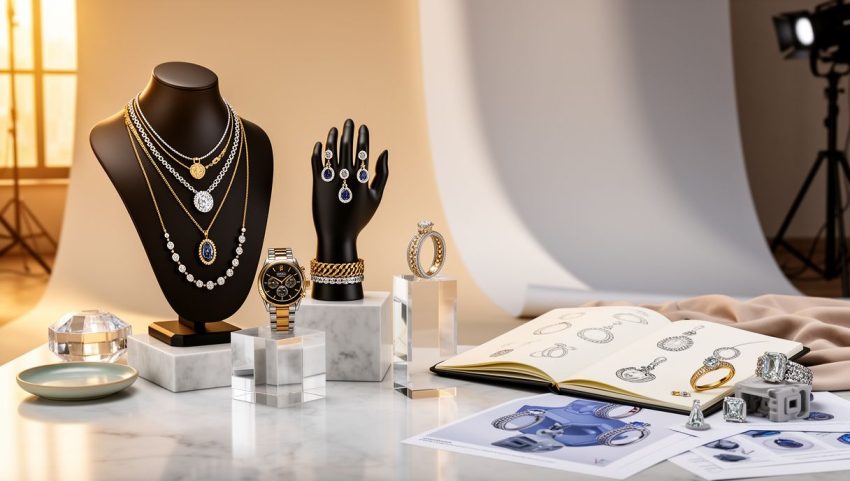
Jewellery is one of the hardest categories to photograph well: mirror-like metals, tiny prongs, the fire of gemstones, and minuscule imperfections can make or break a product page. That’s why brands are embracing AI jewellery product photography to create studio‑quality packshots, on‑model imagery, and lifestyle scenes from sketches, CAD files, or existing product photos—fast. By replacing time-consuming setups with intelligent, controllable rendering and editing, AI brings unmatched consistency, speed, and creative freedom to visual production while preserving the precision that luxury shoppers expect.
Why AI Is Transforming Jewellery Photography
High-end jewellery demands a visual language of precision: crisp edges, true metal tones, accurate scale, and convincing gemstone brilliance. Traditional shoots rely on complex rigs, miniature reflectors, polarizers, and hours of retouching to tame reflections and refractions. AI shifts this labor-intensive workflow into a smart, controllable environment. Instead of rescheduling for weather or scouting bigger light tents, creators can set virtual lighting with pinpoint control—softboxes, scrims, and HDR environments—dialing in micro-highlights that sculpt prongs and bezels while maintaining believable shadows.
For e-commerce teams, the gains are immediate. Consistency across angles, SKUs, and finishes drives trust and conversion, yet it’s notoriously difficult to keep backgrounds, shadow depth, and color identical from shoot to shoot. With AI jewellery product photography, you can lock brand-approved templates and apply them to every piece—rose gold hoops and platinum solitaires rendered with identical framing, luminance, and color calibration. This ensures catalog pages feel curated, not cobbled together. The same toolkit generates 2K and 4K outputs suitable for zoomable PDPs, high-resolution marketplaces, and print collateral without separate workflows.
AI also solves a key scale problem. When collections multiply across metals, stone sizes, and colorways, the old approach—photograph each variant—creates cost and scheduling bottlenecks. AI allows you to change surface finishes, swap diamond cuts, and adjust chain lengths virtually, then output a complete variant set in minutes. This doesn’t only save budget; it opens room for creative testing. Marketing teams can spin up multiple hero concepts—minimalist gradient backgrounds, editorial textures, or seasonal palettes—then A/B test performance across channels without booking new studio time. And for social, where motion stops scrolls, AI-generated turntables and subtle animated light sweeps transform static packshots into thumb-stopping content without extra rigs.
Crucially, accuracy and authenticity remain non-negotiable. Modern AI pipelines support physically based materials that mimic anisotropy on brushed metals, gemstone dispersion and caustics, and micro-surface roughness for satin finishes. This yields visuals that reflect how light truly behaves on pavé settings and baguette cuts. Combined with color-managed outputs and measurements anchored to real dimensions, shoppers see what they’ll receive, reducing returns and building brand equity.
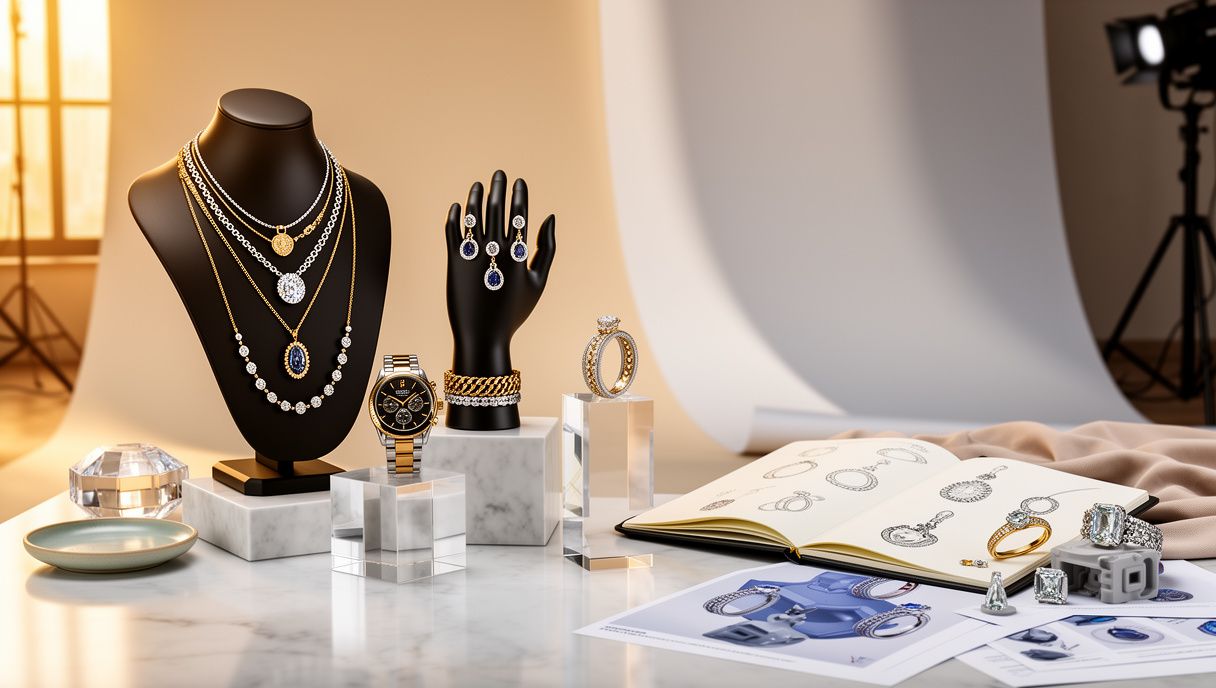
From CAD to Campaign: A Practical Workflow
Whether you start from a sketch, a production-ready CAD file, or a single product snapshot, the AI-driven workflow follows a simple arc: ingest, define materials, light, compose, and export. Upload or drag-and-drop your source, then map materials at a granular level: 18K yellow, 18K rose, platinum with rhodium plating, and specific stone properties like refractive index, clarity, and cut. Assign realistic micro-roughness to metal bands (mirror polish vs. satin brushed), and specify prong geometry so claws read crisp without blowing out highlights. Advanced engines simulate subtle gemstone fire and the way facets catch light at different angles, eliminating the plastic look that can plague low-quality renders.
Lighting and scene building come next. Choose an infinite white to match marketplace requirements, a controlled gradient backdrop for luxury PDPs, or a lifestyle set that places a pendant on an elegant vanity surface with natural window light. Here, AI excels at handling macro challenges: shallow depth of field and focus stacking. You can emulate a macro lens at f/11 with focus bracketing to keep both table facets and the band’s engraving sharp, or push to a dreamy shallow look for social. Virtual reflectors add soft kick lights to define milgrain edges, while smart editing tools tame hot spots on high-polish areas without flattening contrast.
Once the base look is approved, generate a complete angle set: front, three-quarter, top-down, profile, clasp detail, and size context with a model hand or neck. Need on-model visuals but can’t book talent? AI-driven compositing and synthetic models let you place rings on a variety of skin tones and hand poses, preserving scale and shadow realism. For watches and bracelets, adjust wrist size and curvature so fit reads correctly. Export ready-to-upload 2K and 4K assets in sRGB for web, plus print-ready versions as needed, all with consistent file naming and metadata to streamline DAM and PIM ingestion.
Beyond static imagery, you can output 360 spins or short clips showing a rotating stone catching light. AI can simulate a controlled “sparkle sweep” that glides across facets—tasteful motion that communicates quality without gimmicks. And if you started with a real photo instead of CAD, background replacement and lighting relighting tools harmonize legacy assets with new renders. This keeps historical SKUs and fresh launches visually cohesive, a common challenge for brands migrating to AI-first pipelines.
For teams prioritizing speed-to-market, templates are invaluable. Build a “signature packshot” recipe—camera height, focal length, key to fill ratio, ground shadow intensity—and reuse it across launches. Locking templates means new styles can go live hours after finalizing a CAD, collapsing the product-to-PDP timeline while safeguarding brand consistency.
Use Cases, Service Scenarios, and Real-World Wins
Independent artisans, heritage retailers, and fast-growing D2C brands all benefit from the same underlying promise: produce more, better, faster. A boutique jeweller preparing a spring capsule no longer needs to wait for prototypes to arrive before commissioning photography. With CADs and finish specifications, AI jewellery product photography produces launch-ready assets that secure wholesale orders and tease drops on social. When prototypes do land, quick comparisons ensure the visuals match reality, and any final micro-adjustments (a deeper rose tone, a subtler satin) can be applied across the whole image set in minutes.
Consider a multi-location retailer consolidating imagery across regions. Traditionally, each store might coordinate its own shoot, leading to mismatched whites, inconsistent shadow density, and variable retouching standards. Centralizing visual production in an AI studio standardizes every asset while still allowing local nuance—such as lifestyle scenes with textures nodding to London townhouses, New York lofts, or Dubai’s warm tones—without compromising the unified catalog look. Seasonal storytelling becomes easy: switch a background to marble for bridal capsules, linen for summer drops, or deep velvet for holiday campaigns, all from the same master model.
There’s a measurable ROI story as well. By skipping recurring studio rentals, travel, and complex lighting setups, brands redirect budget into media and creative testing. Time-to-first-asset shrinks from weeks to hours, keeping merchandising and marketing in sync. Returns often dip thanks to more accurate representations, especially when AI enforces scale references—a pendant on a bust at a known dimension, a ring next to a millimeter ruler, or a watch photographed alongside a known-diameter prop. And sustainability improves: fewer physical samples shipped, less waste created for once-and-done shoots, and far lower logistics emissions.
For social teams, AI enables variation at scale without creative fatigue. A single hero ring can be rendered in five colorways, two finishes, and three lighting moods, yielding dozens of assets for ads and organic posts. With built-in brand presets—logo size, crop, and font overlays—every image leaves the studio consistent and on-brand. Meanwhile, ecommerce managers can automatically generate marketplace-compliant imagery (pure white backgrounds, defined margins) and editorial PDP images from the same source model, removing one of the biggest friction points in omnichannel selling.
Best practices ensure results stay honest and premium. Use color-managed workflows; validate gold, platinum, and gemstone tones against calibrated references; and confirm scale with measurements tied to your CAD. Keep retouching within ethical bounds: tidy fingerprints and dust, but do not visually upgrade clarity or carat beyond what the buyer receives. Document a QA checklist—metal tone match, facet definition, prong visibility, engraving legibility, and shadow realism—so every asset meets luxury standards. When needed, embed a subtle disclosure noting AI-assisted production to maintain transparency while keeping the focus on craftsmanship.
For brands ready to modernize, platforms purpose-built for jewellery and high-end accessories consolidate these capabilities into a drag-and-drop studio with realistic materials, on-model placement, and campaign-ready scenes. Learn how creative teams convert sketches and CADs into polished, launch-ready visuals using AI jewellery product photography to scale content for ecommerce, social, and print without sacrificing the fine detail that defines luxury.

Beirut architecture grad based in Bogotá. Dania dissects Latin American street art, 3-D-printed adobe houses, and zero-attention-span productivity methods. She salsa-dances before dawn and collects vintage Arabic comic books.