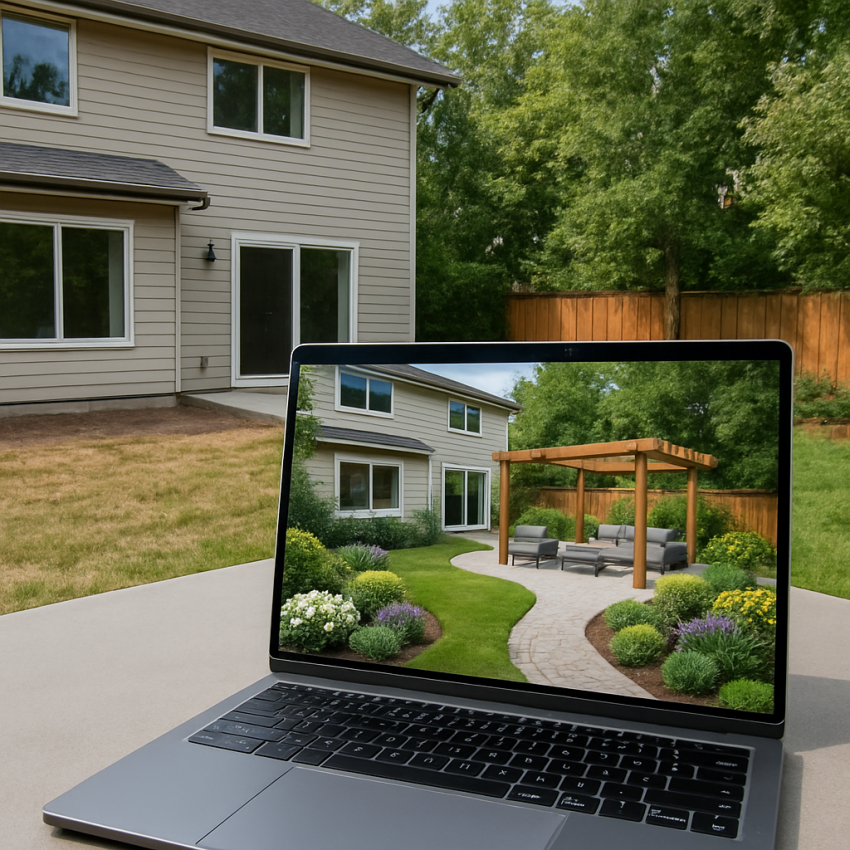
What AI Brings to Backyard Design: From Photo to Possibility
Backyard transformations used to begin with hand-drawn sketches, guesswork about plant placement, and lengthy back-and-forth with contractors. Today, AI backyard design tools streamline the process by generating photoreal concepts from a single yard photo. You upload an image of your outdoor space, describe what you want—perhaps a cedar pergola, modern pavers, drought-tolerant planting, or a plunge pool—and the system returns multiple, lifelike variations that align with your style and budget goals. Instead of trying to imagine outcomes, you can see them clearly in minutes.
This approach makes early planning faster and more accurate. AI can suggest layouts that balance hardscapes and softscapes, demonstrate traffic flow from the house to the patio, and illustrate how different materials—decking, concrete, gravel, porcelain pavers—change the look and feel. You can try a contemporary scheme with crisp lines and architectural grasses, then swap to a cozy cottage look with curved beds and pollinator perennials. The result is a landscape visualization journey that empowers better decisions without needing advanced design skills.
AI also excels at narrowing choices. Struggling to pick paver patterns? Generate views that compare herringbone, running bond, and large-format slabs side by side. Wondering if a fire pit should be centered or offset? Test both. Curious how privacy screens, trellises, or tall hedges will affect sightlines? Visualize their placement at the back fence or along a side yard to reduce neighbor views without making the space feel closed-in. These data-light, visual experiments remove uncertainty and limit costly mid-construction changes.
Beyond aesthetics, strong platforms guide practical details. Thoughtful prompts can surface ideas for drainage swales along a slope, permeable pavers to handle heavy rain, or sun/shade zoning for plants. You can explore seasonal interest by previewing spring blooms and fall color, evaluate low-maintenance groundcovers in place of turf, and model outdoor lighting to illuminate steps and seating areas. These previews help you align the design with how you truly live—hosting friends, gardening, exercising, or relaxing after work.
Finally, AI compresses collaboration. Homeowners, designers, and real estate professionals can generate options quickly, gather feedback, and iterate. Visuals become a shared language with contractors, making scope clearer and quotes more precise. With one well-crafted prompt and a yard photo, you can produce polished concepts that transform abstract ideas into buildable directions.
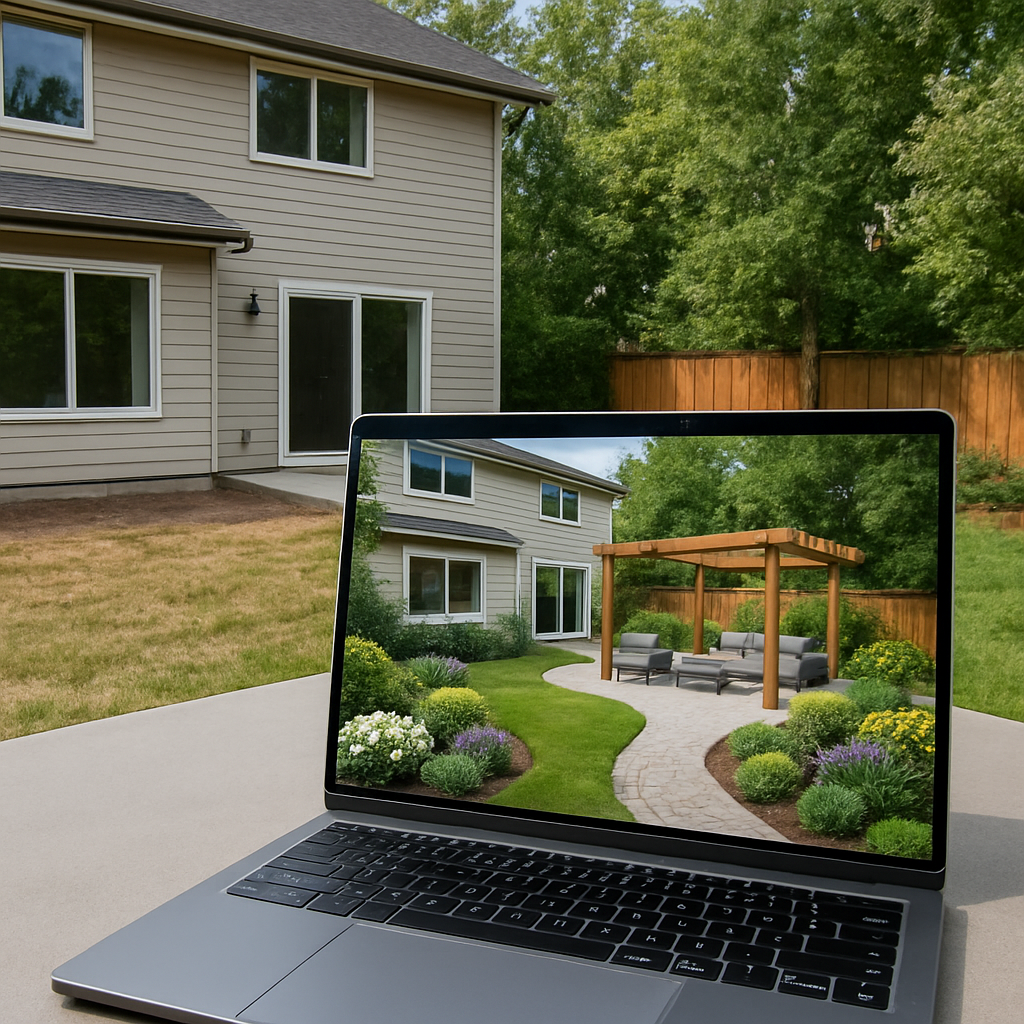
Real-World Use Cases, Styles, and Regional Considerations
Every property has unique constraints, yet many outdoor goals repeat: create privacy, reduce maintenance, add functional zones, and elevate curb appeal. AI shines in these common scenarios by tailoring concepts to your yard’s size, orientation, and style. For compact urban spaces, it can propose space-saving built-ins—bench seating with storage, wall-mounted planters, or narrow raised beds—that maintain walking clearance. In larger suburban lots, it can organize entertaining zones, kids’ play areas, and quiet corners without sacrificing flow.
Families often request kid-friendly lawns paired with durable, low-maintenance hardscape. AI design previews can juxtapose synthetic turf with stepping-stone paths and mulch rings to protect tree roots. Pet owners can visualize dog runs with decomposed granite or pea gravel, along with shaded nooks and hose access. For avid grillers, the tool can compare a straight-run kitchen to an L-shaped setup, toggling counter materials (concrete, quartz, stainless) and storage layouts. These iterations surface the best balance of function, budget, and style—before you lift a shovel.
Regional and microclimate intelligence further improves outcomes. In hot, dry climates, AI can suggest drought-tolerant landscaping—such as native grasses, salvias, and low-water succulents—surrounded by gravel mulch and drip irrigation lines. In rainy regions, concepts might prioritize permeable surfaces, rain gardens, and elevated decks. Cold-weather yards benefit from windbreak planting concepts, robust paver bases that handle freeze-thaw cycles, and fire features to extend the season. In coastal zones, AI can visualize corrosion-resistant materials and salt-tolerant plantings. These localized suggestions reduce long-term maintenance and improve plant survival.
Style is equally flexible. Whether your home leans modern, farmhouse, Mediterranean, or cottage, AI can auto-match the backyard style to the architecture, echoing rooflines, colors, and fenestration. It can explore formal symmetry with clipped hedges, or naturalistic meadows with sinuous paths and boulder groupings. Lighting mockups can transition spaces from day to night—path lights for safety, downlights for trees, and subtle step lighting. Even water features can be trialed visually, from a slim rill to a small koi pond, revealing scale and sound considerations in context.
Finally, AI helps align design with local rules and realities. While you must still verify setbacks, easements, and HOA restrictions, previews can place pergolas, accessory structures, and fences in sensible positions that typically comply with codes. Where lots are sloped, the system can show tiered terraces and retaining solutions. For busy homeowners, it can optimize low-maintenance landscaping—mulch depths, weed barriers, and plant spacing—so the yard looks polished without constant upkeep. The outcome is a plan that respects climate, code, and lifestyle in one cohesive vision.
Workflow: Turning AI Concepts Into a Confident Build
Successful projects follow a straightforward path: clarify goals, generate options, refine details, and share visuals with pros. Start by listing must-haves (seating for six, a shade structure, a defined grill zone) and nice-to-haves (water feature, raised herb garden, outdoor TV). Take clear, well-lit photos from multiple angles—eye level from the back door, corners of the yard, and any elevated vantage point. Provide a rough sketch or measurements so scale feels right in the visuals. Thoughtful prompts yield stronger results: specify materials, color palettes, desired plant types, and maintenance tolerance.
With a single upload, platforms dedicated to ai backyard design can present variations in minutes. Compare concepts side by side and note what you like in each—perhaps the pergola size from one, the paver texture from another, and the planting palette from a third. Merge these wins into a refined prompt and generate a second round. Iterate until the result aligns with your vision and budget. Use before-and-after comparisons to ensure every change adds value rather than complexity.
Next, convert visuals into actionable steps. Create a materials takeoff by listing pavers, edging, mulch, plants, and lighting fixtures shown in the design. Identify phases if you prefer to build over time: phase one might handle grading and primary hardscapes; phase two could add planting and lighting; phase three might finish with furniture and decor. Where drainage or grading is involved, include a note for professional verification. AI concepts are guidance; final technical plans should meet local codes and site conditions.
Share the visual package with contractors for estimates. Clear images reduce miscommunication and scope creep. Ask for pricing on alternates—different paver lines, composite versus wood decking—so you can make tradeoffs without losing the design intent. For HOA or city approvals, include the renderings along with site measurements and product specs. If selling a property, use the visuals to stage potential: buyers love seeing a move-in-ready outdoor lifestyle, and attractive concepts can differentiate listings.
After installation, document the real yard with updated photos and compare them to the AI visuals. The closer the match, the more confidence you have for future projects. Over time, adapt the space with seasonal plant swaps, new planters, or a fresh stain on wood elements. Because your design journey began with precise visualization, you’ll have a cohesive framework that supports small changes without losing the overall look. This is the promise of AI backyard design: faster planning, fewer surprises, and a space tailored to how you live outdoors.

Beirut architecture grad based in Bogotá. Dania dissects Latin American street art, 3-D-printed adobe houses, and zero-attention-span productivity methods. She salsa-dances before dawn and collects vintage Arabic comic books.